

2026-05-29 | Column
Material Science on the Dining Table
Material Science on the Dining Table: Analyzing FDA/NSF Standards, the Magnet Myth, and the Food Safety of 304, 316, and 430 Stainless Steel I. Introduction: Th
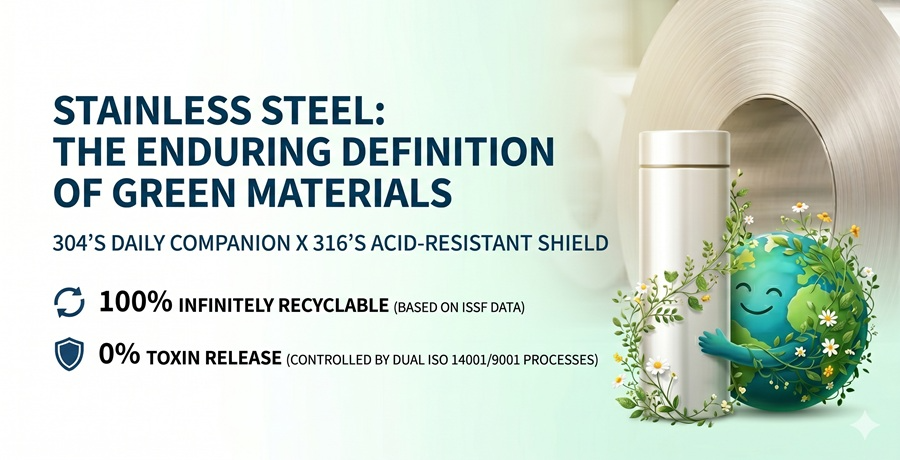
With approximately 1,500 single-use plastic bottles consumed every second in the United States alone, plastic waste has become a staggering environmental crisis. Fortunately, more consumers and global enterprises are recognizing the urgent need for eco-friendly alternatives and are turning to reusable stainless steel tumblers. Far beyond being just a trendy accessory, stainless steel is rapidly proving to be the ultimate "green" material for everyday drinkware and industrial applications.
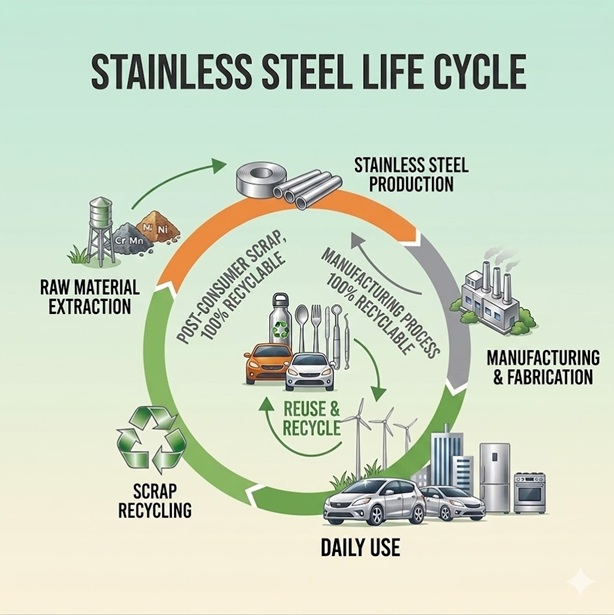
The cornerstone of any green material is its lifespan and recyclability. Investment in a stainless steel tumbler offers remarkable long-term value because it can be reused indefinitely. According to data from world stainless (formerly ISSF), stainless steel is 100% recyclable without any degradation in its mechanical or chemical properties during remelting. Unlike fragile ceramics or short-lived plastics, stainless steel is highly durable and unbreakable, allowing it to easily withstand drops, frequent handling, and travel wear and tear without cracking. By consistently utilizing stainless steel, manufacturers and consumers make a highly sustainable choice that significantly cuts down on landfill waste.
For a product to be truly sustainable, it must resist environmental degradation. Premium insulated tumblers are typically manufactured using austenitic stainless steel. The widely used food-grade 304 stainless steel (also known as 18/8) contains chromium and nickel, giving it excellent stability and corrosion resistance. When exposed to air, the chromium reacts to form a microscopic, self-healing passive layer that actively prevents rust.
For even more demanding uses, premium brands utilize 316 stainless steel, which adds 2% molybdenum to the alloy. According to technical publications from the International Molybdenum Association (IMOA), the addition of molybdenum significantly improves resistance to harsh chemicals, chlorides, and highly acidic environments. This exceptional metallurgical strength ensures that the tumbler will not rust, warp, or suffer from micro-corrosion when exposed to acidic drinks like coffee or fruit juices over decades of use.
When engineering premium sustainable hardware, understanding the microscopic trade-offs of materials is vital for procurement certification:
The green benefits of stainless steel extend to how it naturally manages temperature through double-wall vacuum insulation. This construction features two layers of stainless steel with a vacuum-sealed space in between, acting as a powerful barrier that limits the transfer of heat. This technology can keep beverages hot for 8 to 12 hours and cold for up to 24 hours. By naturally preserving the temperature of the drink, it reduces the reliance on household appliances to reheat or cool, adding an element of everyday energy efficiency.
For end-users and corporate buyers, verifying the exact grade of the internal liner is essential to ensure food safety and prevent counterfeits. Four reliable verification methods include:
Consumers should look for brands that publicly provide chemical analysis reports from international testing institutions like SGS. A verified report for 304 must show ~18% Cr and ~8% Ni, while a 316 report must explicitly verify the presence of 2-3% Molybdenum.
For bulk procurement or OEM partnerships, buyers should request the original Mill Test Certificate traceable back to major mills like YUSCO. This certificate acts as a legal pedigree proving the alloy contains the exact chemical proportions specified and is free from toxic scrap contaminants.
Consumers can utilize specialized acid-electrolysis testing kits available on the market. Dropping the reagent onto the steel surface produces a specific color shift within seconds. For instance, low-grade 200-series steel turns dark red rapidly due to excessive manganese content, while authentic 304/316 grades remain stable or turn pale yellow, confirming their high-nickel, corrosion-resistant austenitic integrity.
This is the most advanced, non-destructive testing (NDT) method preferred by the modern stainless steel industry. By deploying a handheld XRF spectrometer against the surface of the cup liner, the instrument utilizes fluorescent X-rays to read out the exact chemical composition percentages within seconds (e.g., confirming Chromium ~18%, Nickel ~8%, or Molybdenum ~2%)[cite: 3, 9]. This guarantees flawless material certification without destroying or altering the consumer hardware.
At Sun Chun Stainless Co., Ltd., established in 1994, we have spent over 30 years perfecting surface processing and material distribution in Taiwan.
Many customers frequently ask us: "Do I absolutely need to buy a 316 stainless steel tumbler to stay safe?"
Let us share an honest industry truth with you: As long as you avoid the low-grade, highly corrosive 201 industrial series, both 304 and 316 stainless steel tumblers produced by reputable manufacturers are entirely safe and excellent for daily use.
Your optimal material choice should depend purely on your personal beverage preferences:
To fulfill our green commitment, Sun Chun relies strictly on prime materials from top-tier steel mills (such as YUSCO) and operates under the dual certifications of ISO 9001:2015 and ISO 14001:2015. Our advanced facility in Taoyuan features specialized processing lines designed for high efficiency and zero material waste:
Whether your procurement requires standard 304 or advanced 316 stainless steel trading and custom processing, Sun Chun provides the ultimate sustainable supply chain alliance.
Data and metallurgical specifications cited from international authorities including the International Molybdenum Association (IMOA), world stainless (ISSF), and YUSCO official technical datasheets.
